
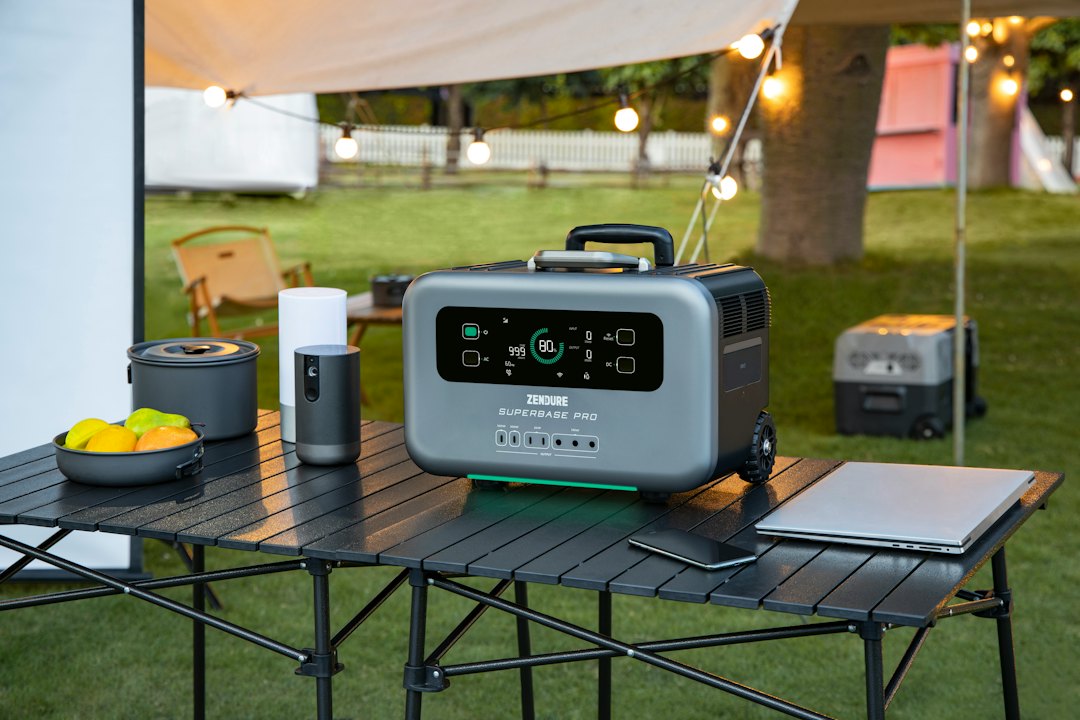
Portable Power Station Guide 2026: How Much Capacity Do You Actually Need?
Portable power stations are increasingly common for camping, short outages, road trips and remote work. The confusing part is not deciding whether a battery is useful; it is deciding how large it needs to be.
The numbers on the box can look intimidating, but you only need to understand three of them: watt-hours, continuous output and surge output. Once those are clear, comparing models becomes much easier.
Start with watt-hours
A 500 Wh battery does not mean every 500-watt device will run for exactly one hour. Real systems lose some energy through the inverter, electronics and conversion. A practical estimate is to allow roughly 10–20% for losses, then divide usable watt-hours by the device’s average wattage.
Simple estimate: runtime in hours ≈ usable watt-hours ÷ average device watts.
Example
If a station has 500 Wh of rated capacity and you assume about 85% usable energy, that is roughly 425 Wh. A device averaging 50 W might therefore run for around 8.5 hours in idealized conditions. Actual runtime can be shorter or longer depending on temperature, device cycling, battery management and inverter efficiency.
What capacity range makes sense?
Around 250–400 Wh
Best for phones, tablets, cameras, LED lights, a laptop, small fans and short router backup. This size is easier to carry and quicker to recharge.
Around 500–800 Wh
A flexible middle range for a laptop setup, lighting, router, television, fans and multiple devices over a longer period. It can also handle some small appliances if the inverter output is high enough.
Around 1,000–2,000 Wh
Better for longer backup, several users or higher-demand equipment. The trade-off is weight, price and recharge time. Do not buy this size automatically if your real use is only charging phones and a laptop.
Capacity is only half the story
A station can have plenty of stored energy but still be unable to start a high-draw appliance. Check both continuous AC output and surge output. Motors, compressors and some heating appliances can demand much more power when they start.
- Continuous output: the sustained load the inverter is designed to provide.
- Surge output: the brief higher load it can tolerate during startup.
- Port limits: USB-C, 12 V and AC outlets may each have separate maximums.
- Charging input: determines how quickly the station can refill from wall, vehicle or solar input.
- Battery chemistry: affects cycle life, weight and thermal behavior.
Make a real load list before buying
Write down the devices you actually want to power and their wattage labels. Add up devices that will run at the same time, then leave headroom rather than choosing a station that sits exactly at the limit.
For outage use, separate essentials from conveniences. Router, lights and phone charging may need surprisingly little compared with a kettle, space heater, hair dryer or cooking appliance.
Portable power station vs. fuel generator
A battery power station is quiet and has no exhaust during normal operation, which makes it useful around living spaces when used according to the manufacturer’s instructions. A fuel generator is a different category: it produces dangerous exhaust gases and must never be operated indoors or in enclosed areas.
Whichever system you use, keep it dry, avoid blocked ventilation, use only compatible chargers and cables, and follow the manufacturer’s limits for temperature, output and storage.
A simple buying checklist
- List your must-run devices and their wattage.
- Estimate how many hours each device needs to run.
- Add 15–20% energy headroom.
- Check continuous and surge watt ratings.
- Check the weight before assuming a larger unit is still portable.
- Compare recharge time using the charging method you will actually use.
- Confirm warranty, replacement battery policy and local service options.
FAQ
How many watt-hours do I need for a laptop and router?
It depends on their actual power draw and how long you want them to run. Add their average watts, multiply by hours, then add conversion-loss headroom.
Can a power station run a refrigerator?
Some can, but you must check the refrigerator’s running and startup demand against the station’s continuous and surge ratings.
Is solar charging always fast?
No. Solar input depends on panel rating, sunlight angle, weather, temperature and the station’s maximum solar input.
Trend signal: Hostinger’s 2026 trending-products overview, which includes portable power stations.
Featured photo: Zendure Power Station on Unsplash.