
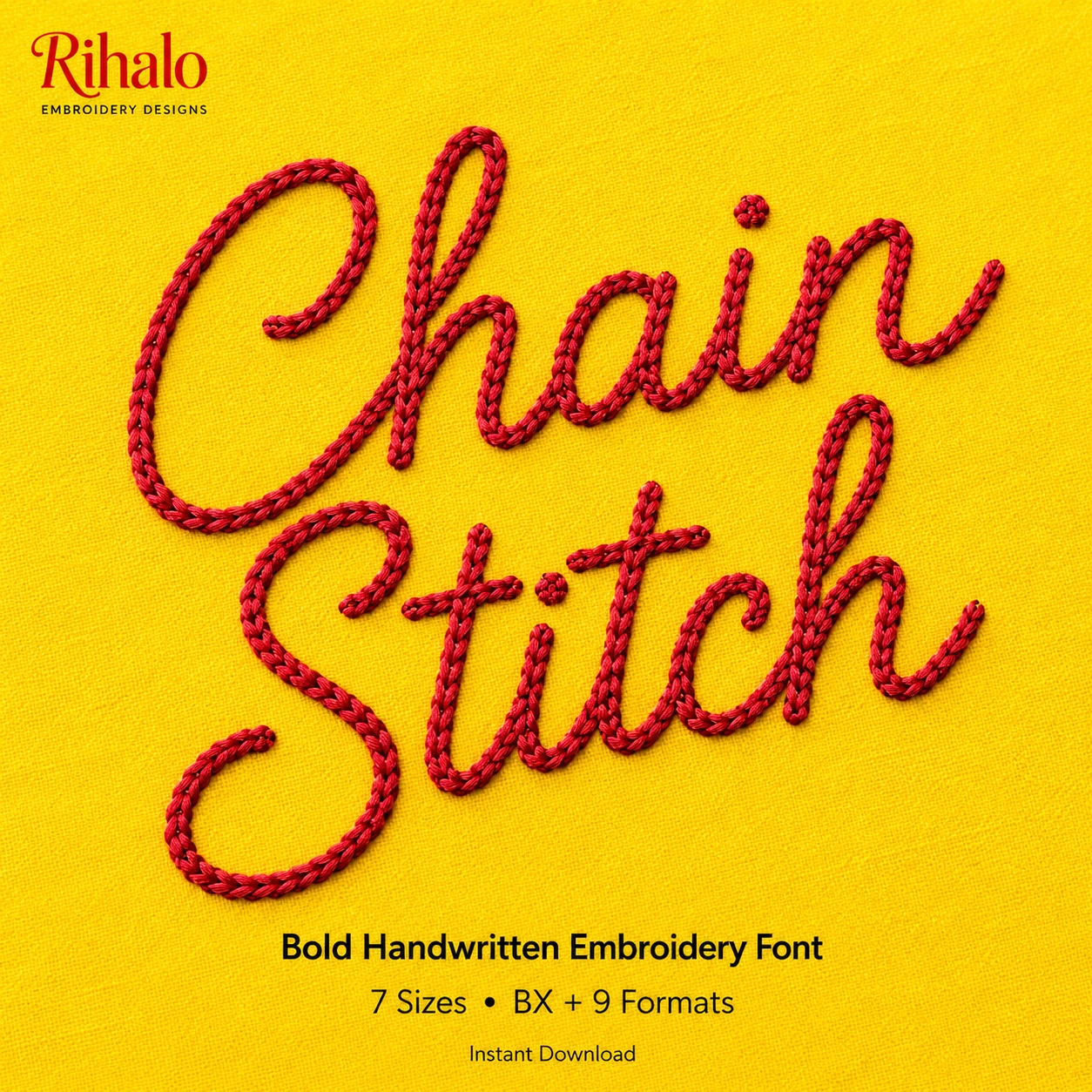
Chain Stitch Embroidery Is Back for Fall 2026
Fall 2026 is leaning into tactile decoration: embroidery, fringe, textured surfaces and heritage-inspired details are showing up across fashion and custom apparel. Chain stitch fits that direction especially well because its looped line looks handmade even when produced by machine.
Why chain stitch looks different
Standard satin lettering creates a smooth filled surface. Chain stitch builds a visible looped path, giving names and outlines a softer, more vintage character. It works particularly well when the design benefits from movement rather than perfectly rigid edges.
Where to use chain-stitch lettering
Sweatshirts, canvas totes, denim jackets, caps and casual outerwear are natural choices. Short names and curved lettering usually show the texture better than long blocks of tiny text.
Good project ideas
Try a first name across a sweatshirt chest, a small word on a tote, initials on a jacket pocket or a retro-style name on a cap. Keep the design simple enough that the stitch itself remains part of the visual effect.
Size matters more than people expect
Very small lettering can lose the open loop character. Always test the exact size on fabric similar to the final item. Stabilizer, thread weight and fabric stretch can all change how cleanly the letters form.
Use an embroidery-ready font
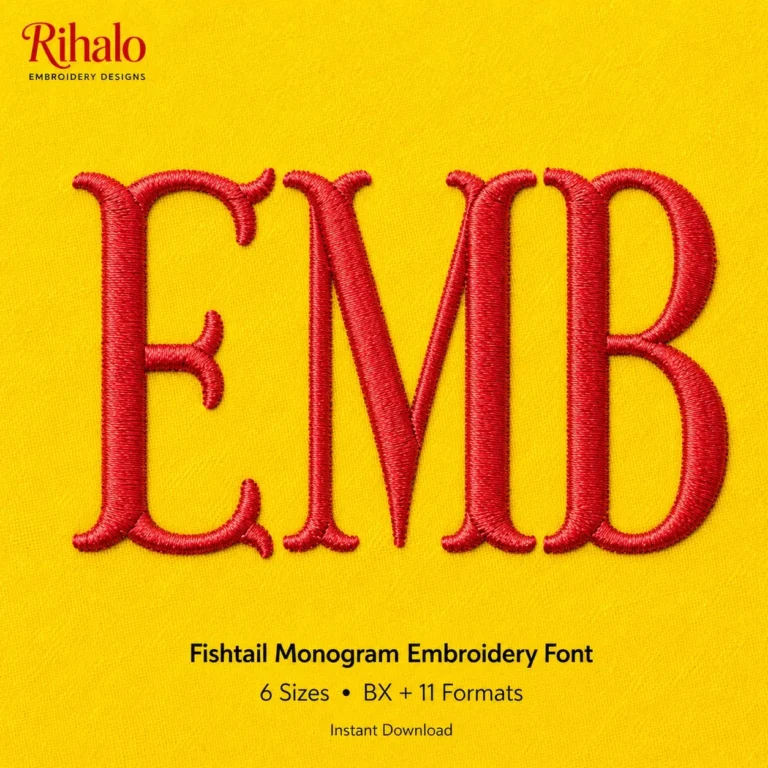
If you use a machine embroidery workflow, an embroidery font is different from a normal computer font because the stitches have already been digitized. Rihalo’s Chain Stitch Embroidery Font includes multiple sizes and machine formats, making it easier to build personalized names without digitizing every letter from scratch.
What you need for a clean result
Match the stabilizer to the garment, use a fresh embroidery needle, hoop carefully and run a test stitch. On stretchy sweatshirts, preventing fabric movement is usually more important than adding extra stitch density.
Hand chain stitch vs. machine chain-stitch lettering
If you are learning the stitch by hand, chain stitch is a beginner-friendly technique for outlines, lettering, vines and decorative borders. Rihalo’s font above is for machine-embroidery workflows, so do not treat it as a hand-embroidery pattern. For hand stitching, practice a short line on scrap fabric first: consistent loop size and spacing matter more than speed.
Which chain stitch variation should a beginner learn next?
Once the basic linked loop feels consistent, choose the variation by the effect you need rather than learning random stitches. Reverse chain is useful when you want more control over direction; whipped chain adds a smoother, heavier outline; cable or heavy chain creates a bolder textured line; and detached chain (lazy daisy) is useful for petals and small motifs. Keep the same fabric, floss and hoop while practicing so you can see how the stitch structure changes without introducing extra variables.
FAQ
Is chain stitch only for vintage designs?
No. It naturally suits retro styling, but minimal names and modern single-word designs can look equally current.
Can I use a regular TTF font?
Not directly on most embroidery machines. Lettering needs stitch data, so use an embroidery-ready alphabet or digitize the text first.


One Comment