
Analog Hobbies Are Booming in 2026: 9 Screen-Free Activities to Try This Weekend
If your free time keeps turning into accidental scrolling, the answer does not have to be a dramatic digital detox. A better approach is to make something else easier to reach. That is the appeal of analog hobbies: activities you can do with your hands, eyes and attention without needing a feed, a notification or a battery percentage.
In 2026, interest in so-called “grandma hobbies” and other screen-free activities has grown well beyond crochet. Watercolor, birdwatching, needlework, puzzles, journaling and other slow hobbies are being treated as enjoyable activities in their own right, not productivity projects.
What makes an analog hobby stick?
The best hobby is not the most impressive one. It is the one with low setup friction, a clear stopping point and enough variety that you can return to it without feeling behind. A project that lives in one basket is easier to pick up than a hobby that requires clearing an entire room.
9 screen-free hobbies worth trying
1. Watercolor postcards
Skip the giant sketchbook at first. Cut or buy postcard-size watercolor paper and paint one small subject: a leaf, cup, window, fruit or simple landscape. The small surface removes the pressure to create a masterpiece.
2. One-page journaling
Use one page per day with three prompts: what happened, what mattered and what you want to remember. This is more sustainable than expecting yourself to write several pages every night.
3. Crochet with one simple stitch
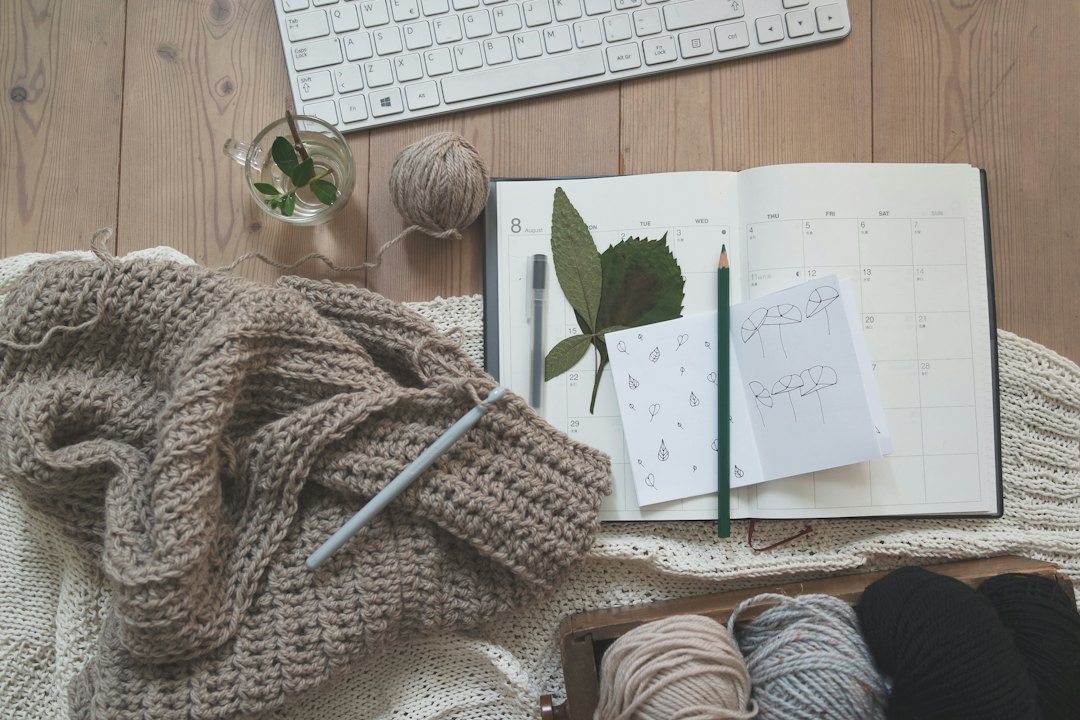
Crochet works especially well as an evening hobby because a basic scarf, square or coaster can be repeated without constantly checking instructions. If you are starting from zero, our beginner crochet hook guide explains what you actually need.
4. A physical puzzle table
Keep a 500-piece puzzle on a tray, board or table that does not need to be cleared daily. Ten minutes of finding edge pieces feels very different from ten minutes of algorithmic content.
5. Birdwatching walks
You do not need to identify every species. Start by noticing shape, size, movement and call. A small notebook makes the activity feel like collecting observations rather than chasing perfect knowledge.
6. Visible mending and hand stitching
Repair one small tear with deliberate stitches. It is useful, creative and finite. Our visible mending guide has ideas for turning repairs into design details.
7. Bread, cookies or one repeatable recipe
Cooking can become a hobby when you repeat the same recipe and improve one thing each time. Pick something forgiving enough that the process remains relaxing.
8. Simple bookbinding
Fold a few sheets of paper, add a card cover and learn one basic stitch binding. Small handmade notebooks are practical, giftable and easy to finish in a single afternoon.
9. Flower and leaf pressing
Collect only where permitted, press flat leaves or flowers between absorbent sheets and use the dried pieces later for cards, bookmarks or framed arrangements.
How to choose the right hobby for your personality
- Choose repetitive activities like crochet or puzzles if you want something calming.
- Choose observational hobbies like birdwatching or sketching if you like noticing detail.
- Choose finishable projects like postcards or small notebooks if visible progress motivates you.
- Choose useful hobbies like mending or baking if you enjoy a practical result.
- Choose collecting hobbies like pressed botanicals or journaling if you enjoy preserving memories.
Build a screen-free corner, not a perfect routine
Put the hobby where you naturally sit. A basket beside the sofa with yarn, a notebook and pen on the coffee table, or a puzzle tray near a window removes the hardest step: deciding to begin.
You can also keep your phone in the same room. The goal is not to prove discipline; it is to make the physical activity more inviting than the screen for a little while.
FAQ
What is the cheapest analog hobby to start?
Journaling, walking-based observation and simple paper crafts can start with supplies you may already own.
How much time do I need?
Ten to twenty minutes is enough for many activities. Short sessions are often easier to maintain than a large weekly commitment.
Do analog hobbies have to be completely phone-free?
No. You can use a phone briefly for a reference or timer and still keep the main activity physical and screen-light.
Why this trend still matters in September 2026
The analog-hobby story has strengthened rather than faded. Fresh September coverage continues to document younger adults choosing tactile, social and screen-light activities, while recent reporting cites strong growth in searches for analog hobbies. The useful takeaway is not that every old-fashioned pastime is suddenly fashionable; it is that low-friction activities with a physical result—stitching, paper crafts, puzzles, painting and small repair projects—fit a broader appetite for time away from feeds.
That also changes how to shop for a new hobby. A starter kit, compact tool set or small project is usually a better first purchase than a large bundle. Look for enough material to finish one or two projects, clear beginner instructions and tools you can reuse if the hobby sticks.
Sources & further reading
- Fortune/AP: Gen Z’s move toward analog “grandma hobbies”
- Cosmopolitan India, Sept. 16: the screen-free hobby shift
- Vogue: what “handmade” means in the current craft revival
- TODAY: analog activities and screen-free ideas
Featured photo: Giulia Bertelli on Unsplash.



4 Comments