Mosaic Crochet Is Having a Moment: A Beginner’s Guide to the Technique
Updated September 24, 2026. Mosaic crochet is having a notably active September. The clearest current signal is the 2026 Mosaic Crochet Summit, a three-day online event running September 22–24 that says more than 9,000 makers have registered. Specialist publication I Like Crochet has also been promoting the event and its learning toolkit, while designers have released new mosaic patterns and crochet-alongs throughout September.
That does not prove every crocheter is suddenly switching techniques, and it is not a claim about search volume. But it is strong enough to make mosaic crochet worth understanding now—especially for makers who like graphic colorwork, charts and projects that look more complicated than the stitches required.
Why mosaic crochet is getting fresh attention
The current wave is unusually concentrated. The Mosaic Crochet Summit is bringing together more than 15 teachers for technique classes, chart reading, customization and project planning. Its organizer reports 9,000+ registrations for the September 22–24 event. I Like Crochet separately highlighted the summit in September, and multiple designers are publishing new overlay-mosaic projects this month.
Recent examples include a September calendar blanket tutorial from Nicki’s Homemade Crafts, the ongoing Magnetic Outcome crochet-along from Ashlee Brotzell Designs, and new autumn mosaic blankets from independent designers. Together, these signals point to an active learning-and-making cycle rather than a single viral post.
For Rihalo readers, the appeal is practical: mosaic crochet sits at the intersection of traditional handcraft, digital charts and printable patterns. If you already enjoy seasonal crochet projects or are trying to spend more time on screen-free creative hobbies, it is a logical technique to explore.
What is mosaic crochet?
Mosaic crochet is a family of colorwork techniques used to build patterns with contrasting yarns. Instead of carrying several colors through every stitch, many mosaic methods alternate colors by row or round. Strategic stitches are worked into lower rows to reveal blocks, lines and motifs.
The result can resemble tiles, woven textiles or pixel art. That visual complexity is one reason mosaic blankets photograph so well—but it can also intimidate beginners. The useful surprise is that most patterns rely on familiar stitches such as single crochet and double crochet, plus careful chart reading.
Overlay mosaic vs. inset mosaic
| Method | How it works | Good first use |
|---|---|---|
| Overlay mosaic | Longer stitches are worked into lower rows to cover stitches and build the motif. | Graphic blankets, panels, coasters |
| Inset mosaic | Chains and spaces are combined with stitches worked into previous rows. | Repeating geometric fabrics |
Pattern terminology varies by designer, so always follow the method specified in the pattern rather than assuming all mosaic charts use identical rules.
What beginners actually need
You do not need a specialized machine or a large tool collection. A sensible starter setup is two high-contrast yarn colors, the hook size recommended for the yarn, scissors, a yarn needle and a few stitch markers. A printed or tablet-friendly chart can make row tracking easier.
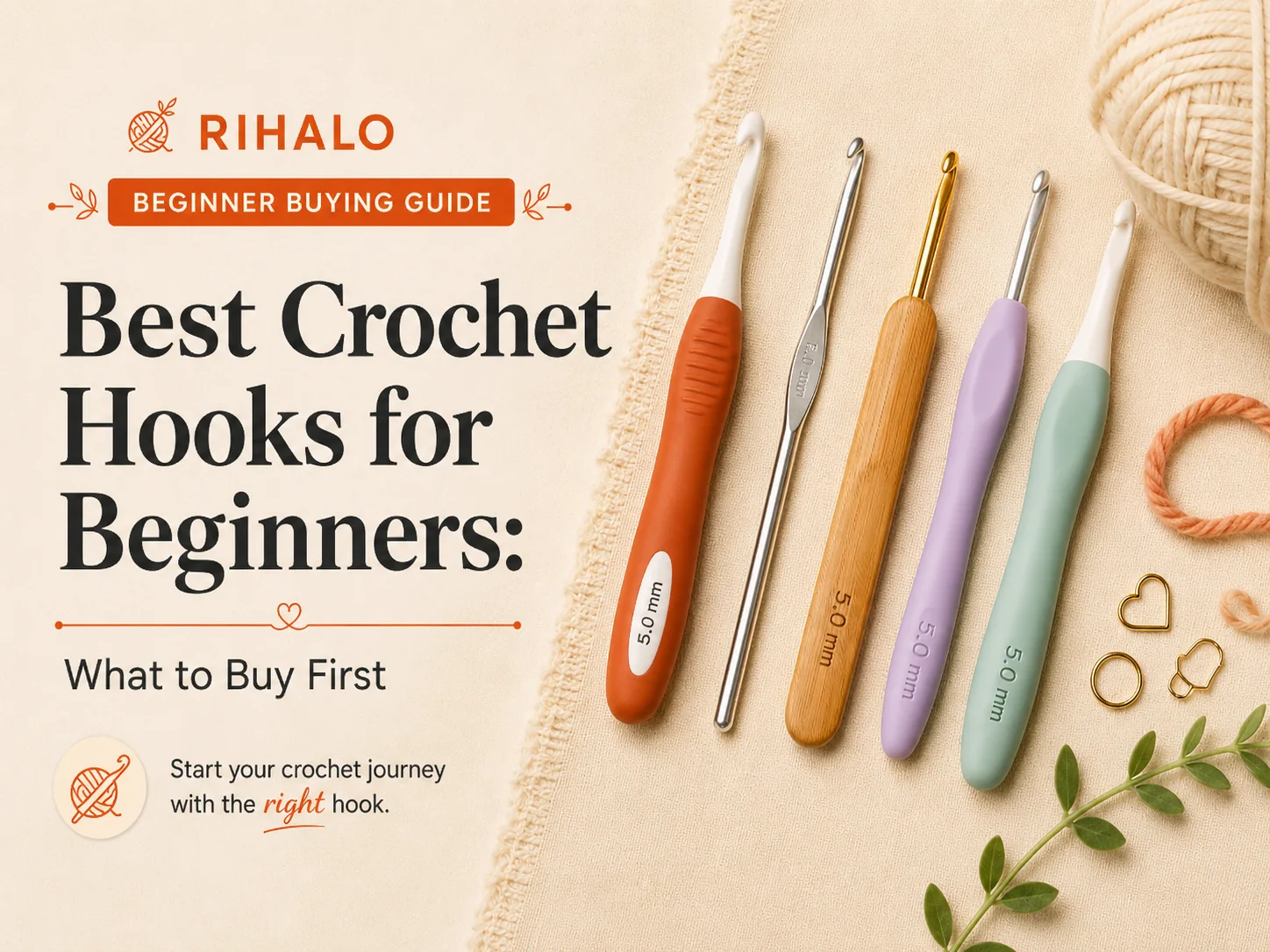
If you are still building your basic kit, Rihalo’s beginner crochet hook guide explains what matters in hook choice without overbuying.
Choose yarn for readability first
For a first swatch, prioritize contrast over fashionable color combinations. Two shades that look clearly different in grayscale are easier to read while learning. Smooth yarn also exposes stitch placement better than fuzzy or heavily textured fibers.
Once the technique feels automatic, gradients, tonal combinations and more subtle palettes become much easier to manage.
How to read a mosaic crochet chart
Mosaic charts are grids. Each square represents a stitch or action, but the exact symbol system depends on the designer. Start by reading the chart key, confirming the direction of each row, and marking the row you are currently working.
- Find the repeat. Many charts mark a section that repeats across the row.
- Identify the active color. Do not infer it from the photograph; use the written instructions or chart key.
- Track row numbers. A removable marker, ruler or digital chart tool prevents accidental jumps.
- Count before the motif grows. Fixing a missed stitch is easier after one row than after ten.
The 2026 summit includes chart-reading instruction, which is a useful sign of where beginners commonly need help: the stitches themselves are often easier than learning how the visual instructions map onto the fabric.
A low-risk first project
Do not begin with a bed-size blanket just because mosaic blankets are visually impressive. A coaster, swatch, small pouch panel or cushion front teaches the same core logic with far less yarn and far fewer opportunities for counting errors.
30-minute practice plan
- Pick two contrasting medium-weight yarns.
- Use a small chart with one repeating motif.
- Crochet only enough rows to see the motif emerge.
- Photograph the front and back so you can inspect tension.
- Repeat the swatch once before buying yarn for a large project.
How to choose a first mosaic pattern
A beginner-friendly pattern should explain its chart symbols, specify whether it uses overlay or inset mosaic, show a clear finished sample, state yarn weight and hook size, and include enough information to estimate materials. Written instructions alongside a chart are especially useful while learning.
For seasonal makers, a small fall motif can be a better first project than a complex afghan. It also lets you test whether you enjoy chart-based crochet before committing to a large quantity of yarn.
What to compare before buying supplies
Once you move beyond practice swatches, material choices matter more. Compare yarn by fiber, yardage, washability and color contrast—not just by the appearance of a single skein. For large blankets, consistent dye lots can matter. For portable projects, a compact notions pouch, locking stitch markers and a comfortable hook may be more useful than a large accessory bundle.
A chart holder, magnetic row marker, tablet stand or project bag can also make sense for makers who work from large grids. Those are convenience purchases, not requirements; try the technique first and buy only what solves a problem you actually encounter.
Common beginner mistakes
Using colors that are too similar
Low contrast can hide the motif and make it harder to see whether stitches are landing in the correct rows.
Skipping the chart key
Mosaic crochet is not governed by one universal symbol system. Read the designer’s legend every time.
Starting too large
A giant blanket multiplies every tension and counting problem. A small repeat is a better classroom.
Assuming the back must look identical
Different mosaic methods create different reverse sides. Judge the project against the technique and pattern, not against an unrelated finished photo.
Could mosaic crochet work for digital pattern sellers?
Yes, but originality and testing matter. The chart itself is part of the creative product. Designers should build their own motifs, test every row, provide a readable legend and export print-friendly files at a useful scale. Do not trace another designer’s chart or reproduce protected artwork as a crochet graph.
The same principle applies to SVG and printable creators: a grid-based aesthetic may be inspiring, but the commercial value comes from creating an original system, motif and presentation rather than converting someone else’s work.
FAQ
Is mosaic crochet hard for beginners?
It can look difficult, but many overlay patterns use basic stitches. Chart reading, counting and consistent tension are usually the bigger learning curve.
Do you use two colors at the same time?
Often no. Many mosaic methods alternate one working color per row or pair of rows, but always follow the specific pattern.
What is the best first mosaic crochet project?
A swatch, coaster or small panel with a short repeat is easier to troubleshoot than a blanket.
Do I need special yarn?
No. Smooth yarn in two clearly contrasting colors is usually easier for practice than fuzzy or highly variegated yarn.
Sources & further reading
- Mosaic Crochet Summit — 2026 event and registration information
- I Like Crochet — Mosaic Crochet Summit / Mosaic Mastery Toolkit
- Nicki’s Homemade Crafts — September 2026 mosaic calendar blanket guide
- Ashlee Brotzell Designs — current 2026 mosaic crochet-along
Trend note: event registrations and new project activity are evidence of current maker interest, not a claim about total market size, sales or Google search volume.